Alpineaire 7 Day Standard Gourmet Meal Kit Review
Information technology almost goes without saying: dinnertime is one of the all-time parts of any backpacking trip. There's just nothing quite like warm, filling food after a long 24-hour interval on the trail. In choosing the best backpacking meals of 2022, we focus on taste, nutritional value, packability, grooming time, and cleanup. In addition, weight, calories, and cost certainly matter to about backpackers, and so we calculated handy "calories per ounce" and "calories per dollar" specs for each. For more groundwork data on choosing the right meal, see our comparison table and ownership communication beneath the picks. To complete your mealtime toolkit, encounter our article on the best backpacking stoves.
Our Team'south Backpacking Meal Picks
- Best But-Add together-Water Backpacking Meals: Good To-Go
- Best Budget Backpacking Meals:Backpacker's Pantry
- All-time Backpacking Meals for Foodies: Heather's Choice
- Best Calorie-Dense Backpacking Meals:Peak Refuel
- Best Market for Backcountry Chefs: Harmony House Foods
All-time Just-Add-Water Backpacking Meals
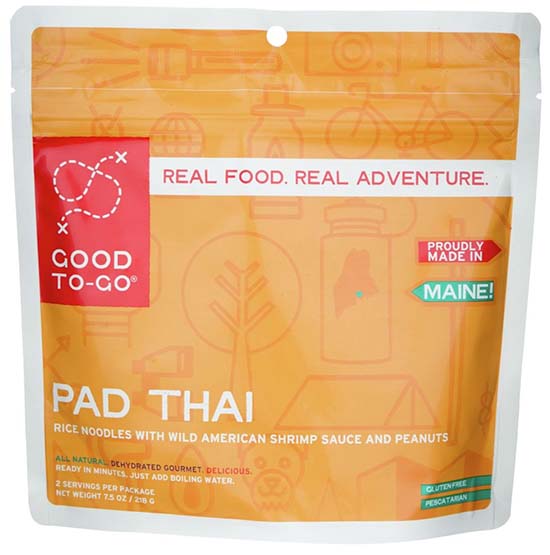
1. Good To-Go ($8 - $fifteen)
 Cooking method: Pouch
Average cook time: 15-xx minutes
Calories per ounce: 112
What we like: Groovy flavors and healthy, real ingredients.
What we don't: Expensive; slower to cook than many of the options beneath.
Good To-Get represents the next generation of backpacking meals: nutrient that nosotros actually would consider eating at home. Designed by professional person chef Jennifer Scism, the array of all-natural, gluten-gratis meals have serious flavor and an ingredient list that is short and readable (translation: real food). The volume of offerings tin't match some of the companies below—Good To-Get has 13 dinner options to engagement—merely the combination of flavor, quality ingredients, and calorie-to-weight ratio earns this Maine-based visitor a resounding numero uno.
You'd look Good To-Go meals to be pricey given their premium ingredients, but they fall about mid-pack in our calories per dollar metric and less than well-nigh all-natural meals here. The largest drawback is cook time: existent-nutrient ingredients dull the prep process, meaning the meals take upwardly to xx minutes to rehydrate (and longer at higher elevations). If you need quick calories, other pouch meals such as Mountain House, Meridian Refuel, and AlpineAire cook in half the fourth dimension. It's no contest for united states, though: Skilful To-Go is worth the wait.
Encounter Proficient To-Become Meals
All-time Budget Backpacking Meals
2. Backpacker'due south Pantry ($seven - $thirteen)
 Cooking method: Pouch
Average cook time: fifteen-20 minutes
Calories per ounce: 113
What we like: Corking bang for your buck and incredible selection.
What nosotros don't: These take a long time to cook.
Backpacker's Pantry has been making dehydrated meals for decades and still is among the most recognizable backpacking food brands. The visitor has one of the largest selections of backcountry meals on the market, including many gluten-free, vegan, and organic options. And they've kept up with the times, with meals for a foodie palate like Jamaican Wiggle Rice with Chicken, Kathmandu Curry, and Pad Thai (which fifty-fifty comes with a small package of peanut butter and handful of separately packaged peanuts). Additionally, all Backpacker's Pantry meals are MSG-free and have a shelf life of 7 years (25 years for their bulk cans).
If you visit the nutrient alley of just about any outdoor shop, yous'll come across Backpacker's Pantry, Mount Business firm, and AlpineAire compete for the title of about ubiquitous backcountry meal. All three are reasonably priced and come in apartment, packable pouches, big serving sizes, and a plethora of special diet options. But we think Backpacker'southward Pantry meals taste improve than the competition, and at 69.9 calories per dollar on average, they offer excellent bang for your cadet besides (Mountain House and AlpineAire meals boilerplate 54.vi and 65.eight calories per dollar, respectively). In fact, some of their two-serving meals (similar Kathmandu Curry) toll as picayune equally $vi.95. You'll take to wait a flake longer to enjoy a Backpacker's Pantry meal, but the value is hard to beat.
See Backpacker'southward Pantry Meals
Best Backpacking Meals for Foodies
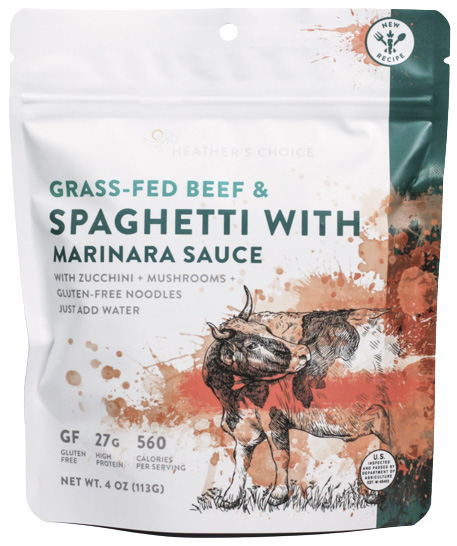
3. Heather's Choice ($13 - $16)
 Cooking method: Pouch
Average cook fourth dimension: 20 minutes
Calories per ounce: 130
What nosotros like: Ethically sourced food that tastes actually good.
What we don't: Expensive; not a ton of options.
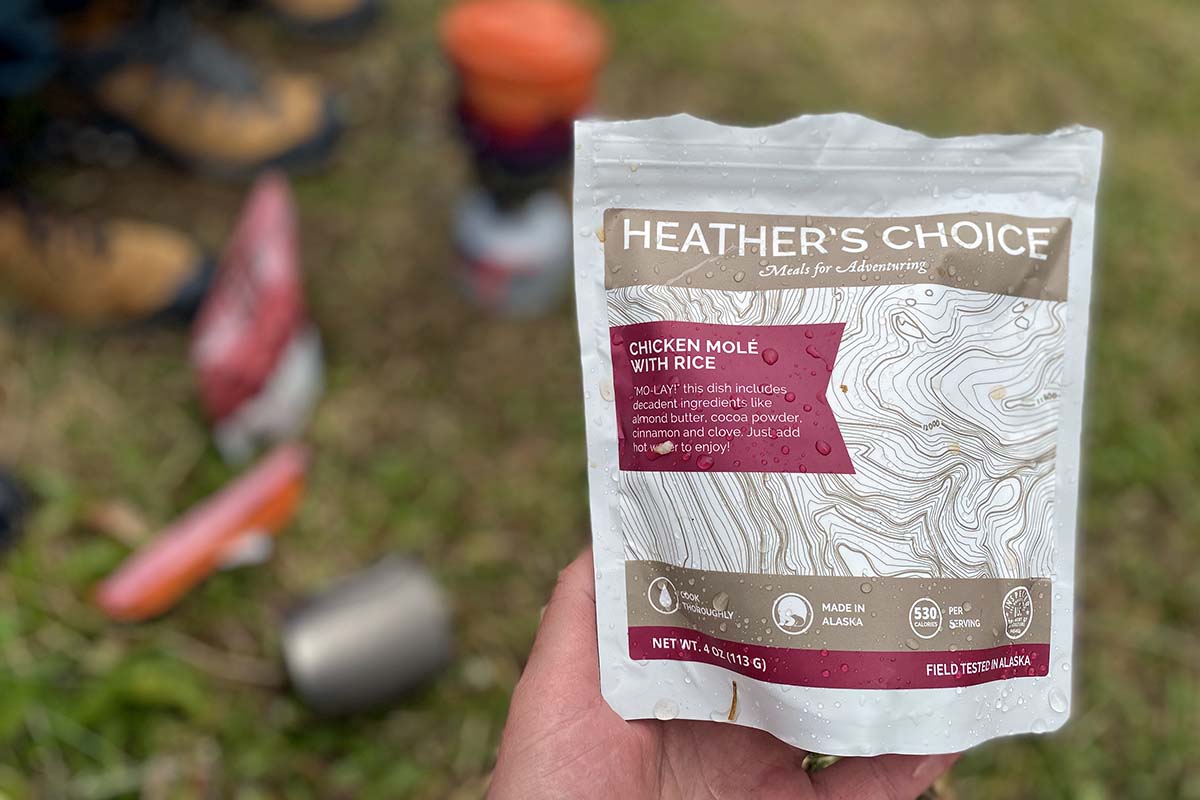
After dehydrating her own backcountry food for years, Alaska-based Heather Feather launched Heather's Choice via a Kickstarter campaign in 2015. Now, this small and growing company is one of our favorite choices when information technology comes to taste, ingredients, and gluten-costless options. Heather takes care in putting together her meals, using loftier-powered foods such as coconut, maple syrup, wild-caught Alaskan Sockeye salmon, and 100-percent grass-fed bison and elk. Impressively, many of the dinner options contain a whopping 35-40 grams of protein per serving and average out to 130 calories per ounce. And the cherry on summit: each meal comes in an impressively tiny parcel (kudos to Heather for conserving materials), which is not bad for modest packs and spoons alike.
You don't get a ton of options with Heather'south Choice, especially if you're a vegetarian (although each dinner is gluten, soy, egg, and dairy-gratuitous). Farther, the one-serving meals will run y'all as much as $16, and at around 500 calories per entrée, you get a lot less bang for your buck than with Good To-Go higher up (34.4 calories per dollar vs. 53.vii). But nosotros recollect Heather'south Option is the all-time-tasting food around, and the tradeoffs could be well worth it for those who don't want to compromise enjoyment or diet while on the trail. And to consummate your kit, we besides recommend looking at Heather's Pick'due south breakfast options ($9) and her pop cookie-like Packaroons, which offering 170 calories of healthy fats and sugars in a 1-ounce package.
See Heather's Choice Meals
Best Calorie-Dense Backpacking Meals
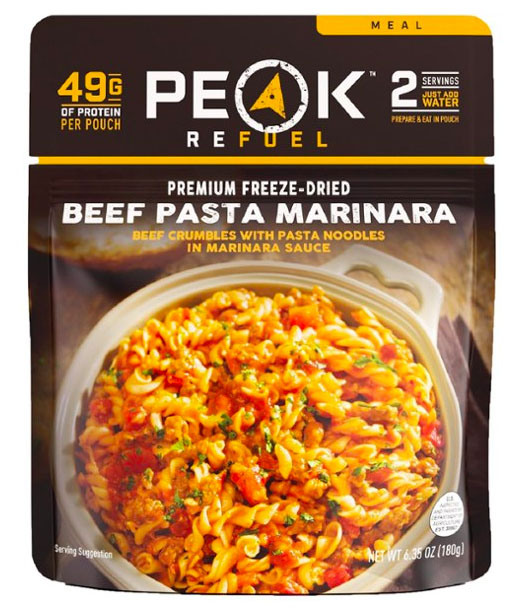
4. Peak Refuel ($xiii)
 Cooking method: Pouch
Average cook time: ten minutes
Calories per ounce: 155
What we similar: Packed with calories and protein.
What we don't: Dishes are noodle-heavy and only come in ii-serving pouches.
Peak Refuel might be relatively new to the backpacking scene, but they've hit the footing running with a competitive lineup of loftier-powered meals for your side by side adventure. Their dinners pack a serious punch with an average of 155 calories per ounce and ane of the highest protein counts of any option on our list (near 22.five grams per serving). And like Mountain Firm below, Tiptop Refuel's entrees are freeze-dried, meaning that they rehydrate in only 10 minutes and with less h2o than dehydrated pouch meals. If you're looking for an piece of cake and quick mode to furnish after a big day on the trail, Peak Refuel is a solid selection.
All that said, there are some tradeoffs to going with such a power- and calorie-packed option. Different companies like Good To-Go and Heather's Option above that prioritize creative and quality ingredient lists, Peak Refuel's offerings are adequately traditional and noodle-heavy. Further, nosotros've institute that the double service sizes aren't ideal for solo adventures—with close to 1,000 calories per pouch, many hikers will finish up sharing or having to save some for later (which can be a process). On the flipside, that means yous tin can have dinner for two for just $13, which is more affordable than most options here.
See Pinnacle Refuel Meals
Best Market for Backcountry Chefs
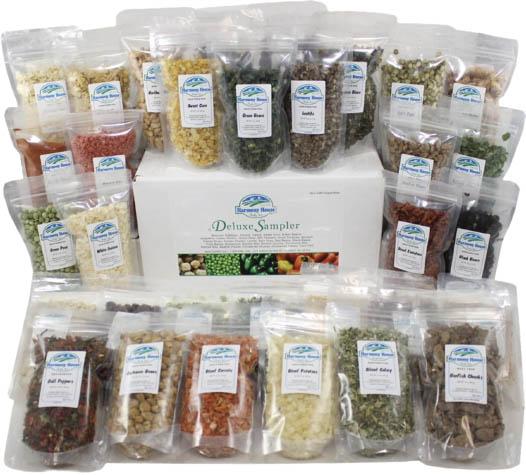
5. Harmony House Foods
 Cooking method: Pouch/pot
Average cook time: x-fifteen minutes
Calories per ounce: N/A
What nosotros similar: All-encompassing choice of nutritious staples for DIY backcountry meals.
What nosotros don't: Vegetarian and gluten-gratis options only.
Harmony Firm's website is reminiscent of the bulk foods alley of your local grocery co-op, with a large assortment of dehydrated and freeze-dried offerings. Ambitious backcountry chefs can stock up on the staples—dried vegetables and beans, meat-flavored TVPs (short for textured vegetable protein), fruits and berries, soup blends, and more than—and save a good deal of cash in the process. You lot can pre-pack your meals at abode (Harmony Firm sells a few different sizes of just-add together-water zip pouches) or bring the pantry to the field and so you lot can improvise for each evening's meal.
Dissimilar most backcountry food brands, Harmony Firm does not offer pre-packaged entrées, limiting their entreatment to seasoned military camp chefs or those inclined to DIY. And because Harmony House is completely vegetarian and gluten-gratis, y'all won't find dehydrated meats or many simple carbohydrates, which are an like shooting fish in a barrel style to tack on extra calories and protein in the field. Farther, virtually hikers will simmer these supplemental ingredients in a pot along with instant rice or noodles (easily purchased at your local grocery store), resulting in additional cleanup compared to simple pouch meals. But if you lot're on trail for long stretches and looking for an affordable yet good for you alternative to pre-packaged dinners, Harmony Business firm is a great place to showtime.
See Harmony Business firm Foods
All-time of the Rest
vi. Firepot ($13 - $fourteen)
 Cooking method: Pouch
Average cook time: 15 minutes
Calories per ounce: 114
What we similar: Well-sourced and delicious meals; more affordable than Heather's Choice.
What nosotros don't: Supply tin can exist depression in the U.S.
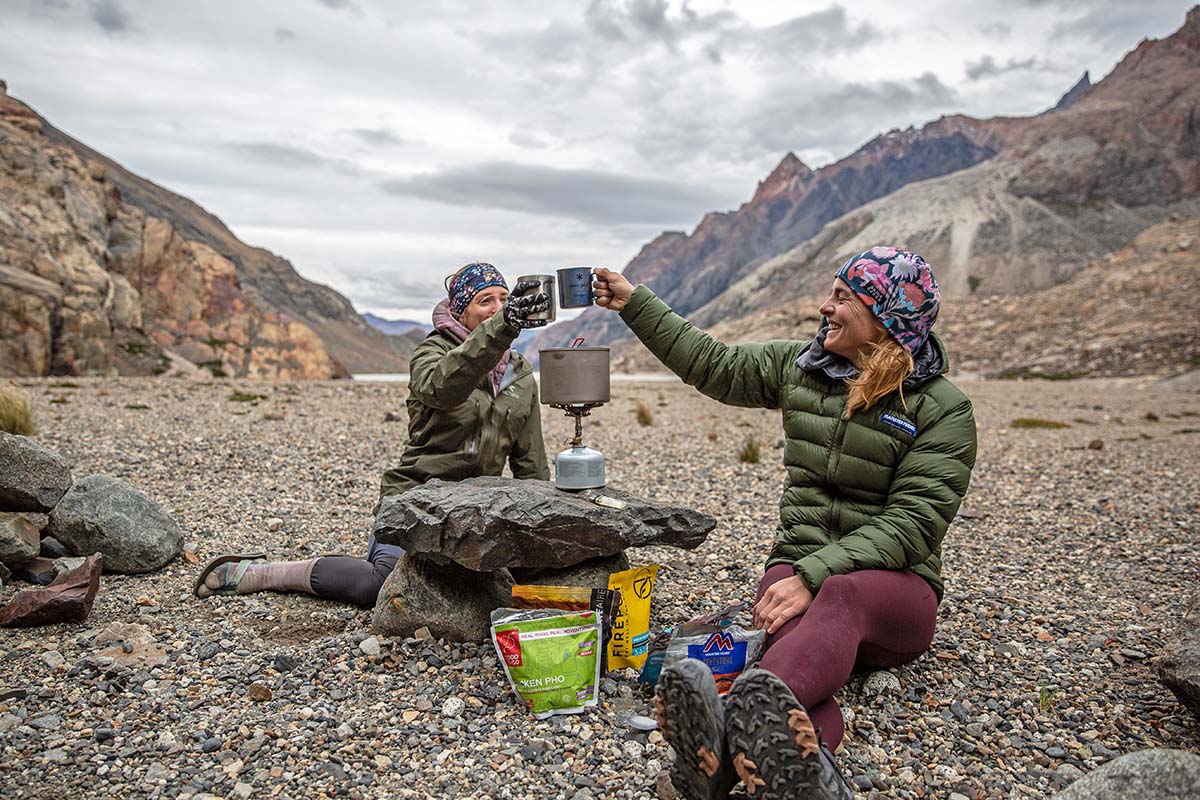
Founded in the rural southwest of England, Firepot is fresh on the scene in the U.S., at present being sold through the outdoor giant REI. We tested a number of their meals on a recent backpacking trip in Patagonia, and were very impressed with what the small startup has put together. Their entrees correspond a positive shift in backcountry cuisine that we're all excited almost: a focus on whole, natural ingredients and thoughtful flavors. Sourcing much of their ingredients from the rural area around their headquarters, Firepot's meals are some of the best we've tasted, and include a number of vegan and gluten-free options besides.
Firepot goes head-to-head with Heather'south Option equally one of the best sourced and healthiest meals here. At 114 calories per ounce, it's not quite as power-packed equally Heather's Choice, which might exist a consideration for those particularly concerned about keeping pack weight low. On the other hand, you get a lot more calories per pouch—ours averaged about 770 calories per meal—which results in a significantly better value overall (specially if you're sharing your meal or like a good for you amount of food). Heather'southward Choice meals are currently a scrap easier to observe in the U.S., but we expect to run across more and more Firepot hit the shelves over time. All in all, they're a nifty brand to have on your radar, and if you order online (a bit tricky from the States), you get the choice of compostable packaging, too.
See Firepot Meals
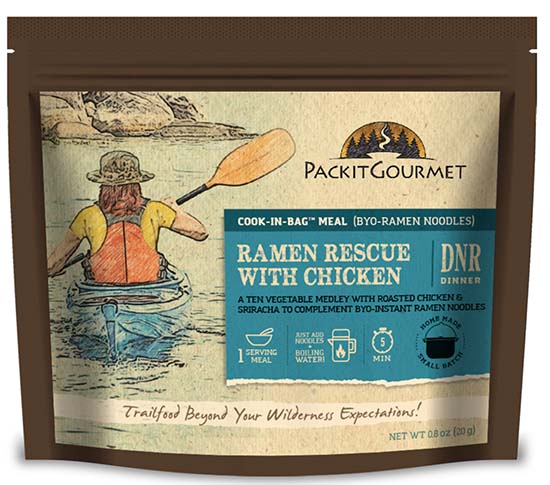
vii. Packit Gourmet ($12 - $13)
 Cooking method: Pouch
Average cook time: 10-xv minutes
Calories per ounce: 114
What we similar: Tasty food with all the accoutrements.
What we don't: Short shelf life.
Packit Gourmet isn't quite a household name, but the small online marketplace boasts an impressively various lineup including prepackaged meals, bulk dried ingredients, individually packaged sauces, and even separate Melt-in-Bags for DIY dehydrated food. They offer more than 20 different tasty dinners (with a variety of options for special dietary needs) that are more flavorful than most of the contest. Packit sweats the details besides: for example, their Austintacious Tortilla Soup comes with a packet of lime powder, dehydrated jack cheese, and tortilla chips. And although their meals are advertised equally i serving, take a closer wait at the label: some of them accept more calories than two-serving meals from other brands.
Packit meals are packaged in recyclable materials, which is a nice bonus, and their updated pouches are low-profile and disappear hands into your pack. Unfortunately, the shelf life of most entrées is relatively short—simply about a year and a one-half. Some likewise require you to pack your own ingredients: for case, the Large'un Burrito with Fajita Chicken is BYO tortilla. But at 114 calories per ounce, Packit meals have a very respectable caloric density for such unique, flavorful dishes, and we're certainly excited for dinner whenever we pull one out of our pack. And did we mention dessert?
Meet Packit Gourmet Meals
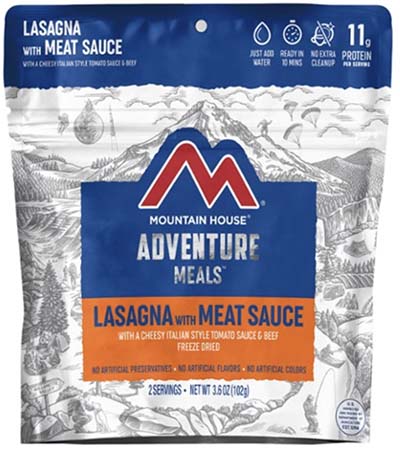
8.Mount House Adventure Meals ($10 - $11)
 Cooking method: Pouch
Average cook time: 9 minutes
Calories per ounce: 122
What we similar: A classic value option with decent taste and high caloric density.
What we don't: Lots of preservatives and sodium.
The Mountain House name is practically synonymous with freeze-dried nutrient, and for good reason. They may not knock it out of the park in terms of taste, but these meals remain a reliable and lightweight standard for backcountry cuisine. Mountain House's home-cooked- mode dinners—similar Craven & Dumplings and Chili Mac with Beef—cook up speedily (ix mins.) and are peachy for filling upward after a long day on the trail. Importantly, y'all besides get good bang for your cadet with a toll that undercuts like 2-serving options by around $4-5, too as a high calorie-to-weight ratio. Plus, all Mountain Business firm meals come with a 30-twelvemonth Sense of taste Guarantee, so you lot tin buy now and eat much, much later.
Mountain House has been dishing up backcountry meals for over 50 years, but the competition has never been fiercer. Unlike options like Good To-Go and Heather's Option above, you won't find all-natural or organic ingredients here, and those with special diets should look elsewhere. In addition, the pasta-heavy menu hasn't changed much in years, and each entrée is startlingly high in sodium (which tin be a expert thing, depending on your needs). And while Mount House is a relatively affordable standby, Backpacker's Pantry wins out in terms of calories per dollar. In other words, we think in that location are a number of ameliorate options in 2022, but nosotros certainly won't mistake you for sticking with an onetime archetype.
See Mountain House Meals
9. Trailtopia Adventure Nutrient ($10 - $14)
 Cooking method: Pouch
Boilerplate cook time: 8-fifteen minutes
Calories per ounce: 114
What we similar: Quality ingredients and convenient packaging.
What we don't: Doesn't stand out in any other way.
Like entrées from brands such every bit Skillful To-Go and Heather's Choice, Trailtopia's ingredient lists are chock-total of all-natural foods with few chemicals or preservatives. Accept their Cajun Smack Chicken & Rice, for example, which is like to a meal you might have at home with long-grain rice, chicken, onion, broccoli, bell pepper, and spices. We're too big fans of their brusque and stout packaging (you won't have to get fishing with your spoon), and sample packs allow you to try out multiple meals at a discount earlier committing to full serving sizes. Finally, entrées are packaged to feed 2 (some unmarried servings are bachelor), and you can besides pick up meat "side packs" to add extra protein.
At that place'southward no denying that Trailtopia'due south meals are salubrious and taste good, which is dandy news at the finish of a long day of hiking. But at only 49.4 calories per dollar, they're not a particularly great value among the competition, and you tin can pack in more than calories at a lower weight with brands like Side by side Mile Meals and Peak Refuel. Additionally, the menu is pretty standard and uninspiring, and yous'll take to dig a bit to find the gluten-free, vegetarian, and vegan options (yous tin can't filter specifically, but these designations are listed straight on the product pages). Only pocket-size gripes aside, we've enjoyed digging into many a Trailtopia meal, and they get our wholehearted recommendation for those looking for real trail nutrient.
See Trailtopia Adventure Food Meals
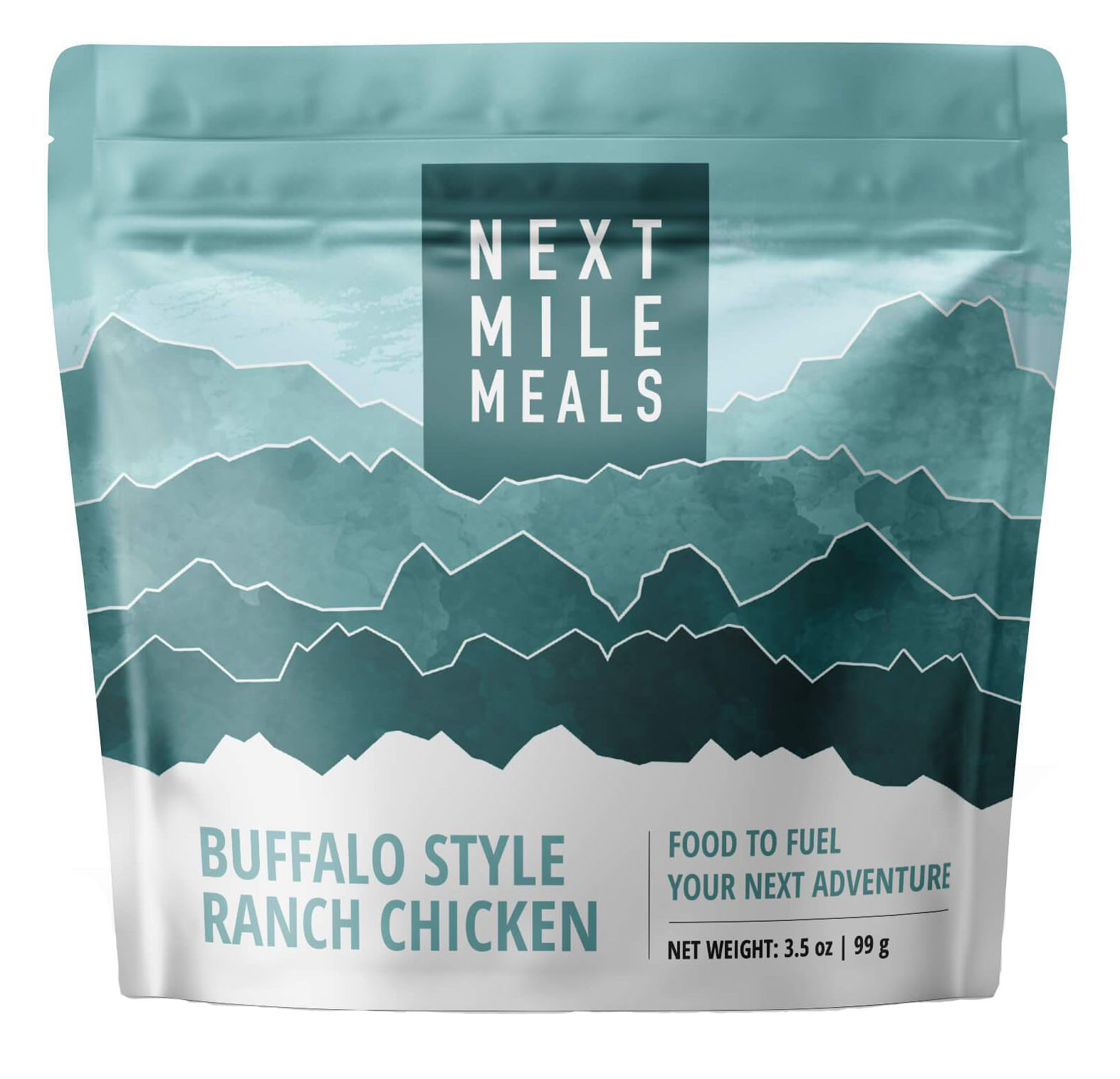
10. Next Mile Meals ($xiv)
 Cooking method: Pouch
Average melt time: 7-10 minutes
Calories per ounce: 142
What we similar: Incredibly food-dense and generous serving sizes.
What nosotros don't: Expensive and express offerings.
Next Mile Meals is a small visitor that hasn't been effectually for long, only we took their meals on a contempo trek in Chile'southward Parque Patagonia and came away very impressed with the flavors, ingredients, and quick cook time. Similar Heather's Choice to a higher place, Adjacent Mile Meals actually taste like existent food, which shouldn't come as much of a surprise later looking at the ingredient labels. These ketogenic entrées cut the carbs and pack in calorie- and nutrient-dense foods like meat, veggies, and cheese. It all adds upwardly to an impressive 142 calories per ounce on boilerplate, which is i of the best calories-per-weight specs hither.
Our master gripe about Adjacent Mile is the price: $14 merely gets you a one-serving pouch, and at only 39 calories per dollar on average, they're far from a standout value (for reference, Backpacker's Pantry meals offer around twice the calories per dollar). You also don't become many entrée choices—vii at the time of publishing—but nosotros wait more than over fourth dimension. Finally, Adjacent Mile Meals are best within a yr of purchase, and the included condiments have a short 180-24-hour interval shelf life. But they're a peachy option in terms of caloric density, and it certainly doesn't hurt that Next Mile Meals are too all-natural and gustatory modality great.
See Next Mile Meals
eleven. Patagonia Provisions ($7)
 Cooking method: Pot
Average cook time: ten minutes
Calories per ounce: 96
What nosotros like: Responsibly sourced, manufactured, and distributed food.
What we don't: Small-scale option of side dishes and snacks but.
No, you lot're not seeing things. Patagonia—the legendary clothing company—is indeed making an appearance on our list of backcountry meals. Known for their ecology consciousness, the company's food branch—Patagonia Provisions—fits into the same mold. They responsibly source, manufacture, and distribute fruit and nut bars, buffalo jerky, salmon, hot cereals, dry soup and chili mix, aboriginal grains mix, and even beer. The food is designed and packaged for the backcountry, but to no surprise, it'southward all adept enough to consume at dwelling house.
We promise to run into Patagonia Provisions aggrandize their lineup to include full dinners, just for now, their organic soups, chili, and grain mixes are swell side dishes for times when yous have a pot available. Soup is a perfect way to hydrate later a long day on the trail with warm, sodium-rich liquids, and many hikers volition slurp one every evening aslope their dinner. And paired with salmon, their savory grains almost make a complete meal (only be forewarned, these meals do require more cleanup than usual). Plus, with an average of 96 calories per ounce, it's not super dense in calories. All gripes aside, many will find the Provisions offerings worth it for the class-leading flavor and diet.
See Patagonia Provisions Meals
12. Outdoor Herbivore ($8 - $16)
 Cooking method: Pouch
Boilerplate cook fourth dimension: 10 minutes
Calories per ounce: 117
What nosotros like: Good for you, all-natural meals that are low in sodium.
What we don't: Harmony Firm has a better selection of bulk ingredients.
Outdoor Plant eater might not have the brand recognition of names like Good To-Get or Mountain House, merely they're even so a groovy one-terminate store for backcountry meals and bulk ingredients. With an emphasis on more than flavour with less sodium (a common additive in backcountry food), they offer a multifariousness of breakfasts and entrées that feature a prissy combination of all-natural ingredients and caloric density. Further, their meals are available in both unmarried and double servings, which is a really convenient option to have. And there's no shortage of salubrious choices to choose from: the Sacramento-based company prides itself on being 100 percent vegetarian, over eighty percentage organic, and all-natural.
With a contempo update to their packaging, the majority of Outdoor Herbivore'south meals come in just-add-water pouches, eliminating the need to dirty a pot or bring an extra bowl. They besides offer a number of repast combos, which make food planning and purchasing easy with sets for anything from weekend outings to 10-day epics. We took some of their meals forth on a contempo backpacking trip in Colorado'due south San Juan Mountains and were impressed with the quality of gustatory modality and ingredients, just were absolutely still hungry after the entrées in particular (many seem more than like sides or salads than full meals). But you can always crash-land upwards to a double serving, and Outdoor Plant eater is as well a not bad place for boosted staples, including instant pasta, egg powder, dehydrated quinoa, and more.
See Outdoor Plant eater Meals
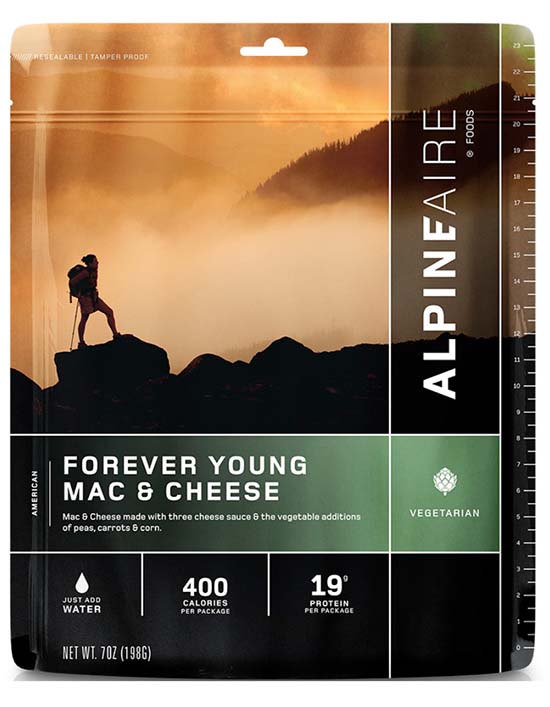
13. AlpineAire Foods ($7 - $14)
 Cooking method: Pouch
Average cook time: ten-12 minutes
Calories per ounce: 106
What we like: Low cost and fun carte items.
What nosotros don't: Tastes like standard backpacking fare.
We'll start by saying that AlpineAire meals sound delicious. With names like Al Pastor with Cilantro Lime Rice, Cheese Enchilada Ranchero, and Tuscan Grilled Chicken Alfredo, y'all practically experience like you're ordering from a restaurant. They besides offer a plethora of special diet options: depression-sodium, vegetarian, vegan, gluten-costless, cholesterol-free, and all-natural. And their eye-catching packaging clearly displays data on ingredients, serving size, and nutrition. The pouches are flat and packable, and the master courses are every bit speedy to cook equally Mount House meals. With a relatively low price, AlpineAire seems similar the whole bundle.
Unfortunately, the taste of AlpineAire meals simply doesn't measure up. Perhaps their names and labeling create overly high expectations, or maybe mixing healthy ingredients with a short cook time stresses the flavors. Whatever it may be, we find that AlpineAire dinners are either noticeably bland or and so over-spiced that they are hard to terminate. If y'all find one you like, stick with it. Otherwise, the pouch meals in a higher place are both tastier and more calorically dumbo.
Meet AlpineAire Foods Meals
xiv. MaryJanesFarm Outpost ($6 - $xiv)
 Cooking method: Pouch
Average cook time: 10 minutes
Calories per ounce: 103
What we like: A whopping xl dinners to choose from.
What we don't: The flavors exit much to be desired.
MaryJanesFarm offers a large assortment of all-natural, organic, mostly vegetarian meals at reasonable prices. Similar to many options here, yous'll recognize all of the ingredients on their labels as real food. These meals (take your pick of around 40 dinners) cook up almost as quickly as Mountain Business firm and are more than nutritious and lower in sodium to boot. Another bonus is paper packaging that is recyclable or burnable. Plus, the MaryJanesFarm website offers bulk servings, perfect for decreasing packaging waste with large groups.
What are our complaints about MaryJanesFarm? It might be a matter of personal preference, but we institute the dinners to be over-seasoned. Additionally, the eco-friendly packaging lacks a resealable closure for cooking your repast in the pouch, but squeezing the air out of the bag and folding the top underneath to melt is a fairly elementary workaround. Finally, the advertised "single serving" is actually 1.5 servings, although this will be adept news for hungry hikers.
See MaryJanesFarm Meals
15. Wild Zora Paleo Meals To Go ($13)
 Cooking method: Pouch
Average cook time: 10-12 minutes
Calories per ounce: 110
What we like: Incredibly food dense.
What we don't: Steep price tag of $thirteen for a single serving.
In a world of noodle-heavy backcountry meals, Paleo Meals To Go's gluten-complimentary and protein-rich offerings are refreshing, and you don't have to be paleo to enjoy them. The Mount Beef Stew Pouch we tried had an impressive ingredient list: beef, vegetables, spices, and sea salt. The meat (free range, grass-fed, and 100% natural) especially stood out: information technology retained the taste and texture of real meat better than other freeze-dried meats we've tried.
One notable drawback to these tasty meals is shelf life, which according to the Wild Zora website, is only ii years from the date of manufacture. That said, we ordered our meal in Apr and it came with an expiration date of Nov 11 of the same yr. Paleo Meals To Get also come at a high price: $13 for one serving, to be exact. For that cost, y'all could accept three servings of Backpacker'southward Pantry. Simply that price difference shows in the nutrition comparing: for ane serving of Mount Business firm Beef Stew, you'll get 15% of your recommended daily Vitamin A, 15% of Vitamin C, and 8% of Atomic number 26. Ane serving of Paleo Meals To Go's Beef Stew Pouch is packed with 320%, 45%, and 90%, respectively. That's a huge selling point for those who are focused on getting more than but calories from their backcountry meals.
Meet Wild Zora Paleo Meals To Go
16. Nomad Nutrition ($12)
 Cooking method: Pouch
Average melt time: viii-12 minutes
Calories per ounce: 161
What nosotros similar: Unique dehydrating process and surprisingly calorie- and protein-packed.
What we don't: Limited selection and not the best value.
A modest company founded by an adventurous foodie from British Columbia, Nomad Nutrition offers nutrient-dense meals with a stiff emphasis on whole food ingredients. And despite being mostly plant-based and 100 pct gluten- and dairy-free, Nomad's entrées are startlingly calorie- and protein-packed, topping our list with an impressive 160.v calories per ounce and 15 grams or more than of protein per parcel. And Nomad is doing things differently with their unique dehydrating process called REVdry, which cuts out the need for preservatives and keeps the ingredient listing both natural and low in sodium (a rarity among the competition).
Compared to Peak Refuel higher up, Nomad Diet's meals have slightly more calories per ounce, and they manage to pull it off without a single noodle-based dish. Merely while two hungry hikers can get away with sharing a Height Refuel pouch, Nomad's similarly priced meals will likely only feed one (they average about 600 calories per pouch), making them the pricier choice past a sizable margin. For some it might be worth information technology: looking inside a Nomad Nutrition pouch is a clean-eater'due south dream, with a colorful rainbow of real food such every bit potatoes, broccoli, peppers, corn, peas, and more. All told, the company is off to a promising starting time, and we're excited to run into where they're headed.
Run into Nomad Nutrition Meals
17. Mountain House Pro-Pak ($eleven)
 Cooking method: Pouch
Average cook time: 9 minutes
Calories per ounce: 131
What we like: Calorie- and protein-rich unmarried-serving meals.
What we don't: Expensive for one serving and non every bit tasty every bit other options above.
Mount Business firm is known for their standard lineup of Risk Meals (above), merely their Pro-Pak is a great option for intrepid backpackers, climbers, and other committed outdoor-goers. In years past, the Pro-Pak stood out with its vacuum-packed pouch, making it i of the most streamlined meals available (this design also prevented expansion at altitude). Simply the newest iteration shifted focus completely, forgoing the compressed size and instead placing a premium on poly peptide, caloric density, and cold-weather performance. Reasonably priced at $eleven, each meal is offered in a single-serving package (520 - 650 calories), making Pro-Paks a overnice option for solo adventurers.
That said, we don't call back the changes were necessarily all good. Compared to Acme Refuel above, Pro-Pak meals fall short in calories for the weight (131/oz. vs. 155/oz. for Peak Refuel), are fairly basic in terms of gustation and ingredients (in that location are no paleo, vegetarian, or gluten-free options), and are lower in protein. Finally, the updated Pro-Paks are only guaranteed for 5 years, although this shouldn't be much of an issue for most adventurers (a long shelf life matters more for emergency preparedness). In the end, if you like Mountain House but want a bit more nourishment for the weight, Pro-Paks are a fine selection. But for a few bucks more, Next Mile Meals or those from Heather's Choice are tastier and more nutritious.
Run into Mountain Firm Pro-Pak Meals
18. Omeals ($8-11)
 Cooking method: Pre-cooked
Average cook time: v minutes
Calories per ounce: 22
What we like: Tasty, convenient, and a fun cooking method.
What nosotros don't: Manner too heavy to be practical.
All of the meals to a higher place are fabricated up of dry ingredients, but Omeals is a pre-cooked option that can be eaten direct from the parcel, hot or common cold. It fifty-fifty comes with a heating element that is activated with 3-5 ounces of any kind of liquid (fifty-fifty sea water or java). Yous don't need a stove or running h2o to heat up a warm dinner, making convenience the forte of an Omeals meal. And because they're non dehydrated, Omeals gustatory modality a lot better than standard backpacking fare. Their flavor and texture are more along the lines of canned chili than rehydrated mush.
If they're tasty and convenient, then why are Omeals all the way down at the bottom of our list? Accept a look at the calories per ounce spec in a higher place: the boilerplate Omeals dinner weighs 10.four ounces (including the heating element) and is simply 230 calories. For the weight of one Omeals packet, you could bring five Mount House meals, which would add up to over 1,300 calories. Furthermore, the heater becomes bulky when activated, and so your load won't decrease too much after dinnertime. You won't observe us bringing Omeals into the backcountry very often, but for sure applications—going without a stove, emergency food in the machine, canoeing, or the novelty of watching a flameless heater at work—they can be a tasty pick.
Run into Omeals Meals
19. MRE Complete Meal ($25)
 Cooking method: Pre-cooked
Average cook fourth dimension: ten-xv minutes
Calories per ounce: 70
What we like: Cheap calories and everything you demand in one bundle.
What we don't: Non much emphasis on taste or ingredients.
If you lot're military personnel, a firefighter, or a search and rescue volunteer, just hearing the acronym MRE—meals fix to eat—might send shivers down your spine. It'due south probable you've had your fill. Similar to Omeals, MREs are pre-cooked and tin be eaten hot or cold, though they as well come with a flameless heater. Each consummate meal comes with everything y'all'll need: an entrée, side dish, dessert, crackers/bread, spread (cheese, jelly, etc.), powdered beverage mix, utensils, a beverage mixing purse, chewing glue, napkin, coffee powder, and diverse seasonings.
If y'all're looking for flavorful or all-natural ingredients, look elsewhere. MREs are fabricated for function: they can withstand parachute drops from over 1,000 feet and have a shelf life of 3 years in fourscore-degree heat. These meals are heavier than most because they're pre-cooked, but unlike Omeals, they still pack in an impressive amount of calories. Take annotation: the supply of MREs seems suspect, so take care when purchasing. Civilian MREs are now made past many manufacturers, and websites such as Be Prepared allow you to pick your flavors and ensure that the meals you buy aren't past their expiration date.
See MRE Complete Meals
Backpacking Meals Comparison Table
| Nutrient | Price | Cal/$* | Method | Time | Cal/Oz* | Special Diet Options |
|---|---|---|---|---|---|---|
| Good To-Go | $viii-xv | 53.7 | Pouch | 15-twenty min. | 112 | GF, vegan, vegetarian |
| Backpacker's Pantry | $seven-13 | 69.ix | Pouch | fifteen-20 min. | 113 | GF |
| Heather'due south Choice | $13-16 | 34.4 | Pouch | 20 min. | 130 | GF |
| Peak Refuel | $thirteen | sixty.v | Pouch | 10 min. | 155 | Vegan, vegetarian |
| Harmony House Foods | N/A | N/A | Pouch/pot | 10-fifteen min. | N/A | GF, vegan, vegetarian |
| Firepot | $13-14 | 59.2 | Pouch | 15 min. | 114 | GF, vegan |
| Packit Gourmet | $12-13 | 34.7 | Pouch | 10-fifteen min. | 114 | N/A |
| Mountain House | $10-11 | 54.half-dozen | Pouch | 9 min. | 122 | GF, vegetarian |
| Trailtopia Adventure Food | $10-fourteen | 49.4 | Pouch | 8-15 min. | 114 | GF, vegan, vegetarian |
| Next Mile Meals | $14 | 39 | Pouch | 7-10 min. | 142 | GF |
| Patagonia Provisions | $7 | 68 | Pot | 10 min. | 96 | GF, vegan |
| Outdoor Herbivore | $8-xvi | 68.6 | Pouch | x min. | 117 | GF, vegan, vegetarian |
| AlpineAire Foods | $vii-14 | 65.8 | Pouch | 10-12 min. | 106 | GF, vegan, vegetarian |
| MaryJanesFarm | $6-14 | 57.9 | Pouch | 10 min. | 103 | GF, vegan, vegetarian |
| Wild Zora Paleo Meals | $13 | 26.two | Pouch | 10-12 min. | 110 | GF |
| Nomad Nutrition | $12 | 53.5 | Pouch | 8-12 min. | 161 | GF, vegan |
| Mountain Firm Pro-Pak | $11 | 55.9 | Pouch | 9 min. | 131 | N/A |
| Omeals | $8-11 | 29.6 | Pre-cooked | 5 min. | 22 | Vegetarian |
| MRE Consummate Repast | $25 | 62.five | Pre-cooked | 10-15 min. | 70 | Vegetarian |
*These numbers represent the averages of weight, toll, and calories per serving for the top 5 meals from each brand (when available).
Backpacking Meals Buying Advice
- About Our Rankings
- Cooking Method: Pouch, Pot, and Pre-Cooked
- Cooking Time
- Calories and Serving Size
- Weight (Calories per Ounce)
- Ingredients and Dietary Restrictions
- All-Natural Options
- Special Diets
- Sodium
- Dehydrated vs. Freeze-Dried
- Breakfast and Coffee
- Bulk Ingredients
- DIY Dehydrated Meals
- Stoves, Fuel, and Cooking Supplies
- Shelf Life and Emergency Preparedness
About Our Rankings
Backpacking food is a difficult gear item to rank considering taste is highly individualized. Some of united states honey loftier-sodium meals in the backcountry, while others require all-natural ingredients. Some prioritize flavor and nutrition, while others wait for calorie-dense meals that pack downwardly small. Our rankings higher up take all of these factors into consideration: price, weight, season, ingredients, packaging, variety of menu, and more. But because we're all looking for something different to eat, you simply might not concur with our numbering. That'southward okay. Using the nautical chart to a higher place, yous can hone in on what matters nearly to you lot and compare the specs for all of the meals we included.

Cooking Method: Pouch, Pot, and Pre-Cooked
One way we've categorized the meals in this article is by cooking method: pouch, pot, or pre-cooked meal. In 2022, many backcountry travelers opt for "pouch" meals like Adept To-Go due to their ease of preparation and cleanup. You simply add boiling water to the pouch and let it sit for the specified amount of time, and no bowl or pot is required (nor is cleaning said bowl or pot afterwards your meal). Notably, the lack of cleanup too reduces affect on fragile wilderness environments. On the other mitt, "pot" meals require that yous cascade the dried contents into a pot, add together water, and nearly oft heat the repast over a flame. Sometimes instructions will require that you lot simmer the meal for up to 10 minutes (requiring a backpacking stove with practiced flame control). Of course, when the repast is finished, yous have to clean the pot and pack it abroad for your next day on the trail.

Pre-cooked meals utilize a preservation process similar to canning, resulting in a shelf-stable meal that tin can be eaten with or without warming. The two pre-cooked meals on our list, Omeals and MRE Complete Meals, come with a small flameless heater, and then you can leave your stove and pot at home. The heaters simply need a small bit of water to actuate, making these meals a huge plus when traveling in dry environments similar Utah. Only before you get too excited about going sans stove, check the calories per ounce column of the comparing chart. Pre-cooked meals are significantly heavier than the dehydrated or freeze-dried competition and aren't viable for virtually weight-conscious backcountry travelers. That said, depending on factors including the length of your trip, they could exist lighter than the combination of dehydrated meals and a stove with fuel.

Cooking Fourth dimension
Depending on the cooking method, the meals in this article accept anywhere from five to 20 minutes to cook. For pouch meals such as those from Heather's Choice, you simply let the nutrient sit in hot water for fifteen-twenty minutes—no need to tend to information technology. Pitch the tent, collect more water, sit down down and work on a crossword with your hiking partner—20 minutes volition fly by. We personally don't mind this waiting fourth dimension and find the distinction betwixt 8 and 20 minutes almost inconsequential (although this doesn't mean that we don't dig in a trivial early and eat crunchy noodles on the rare occasion). On the other paw, pot meals like those from Patagonia Provisions require that you stir the meal occasionally every bit it simmers, meaning y'all'll need to be beside your backpacking stove for the elapsing of the cook time.

Calories and Serving Size
We're non hither to provide an equation for calories burned based on mileage, summit gain, pack weight, distance, body weight, and metabolism, or give our stance on whether or non a backpacking trip is a prime time to start a diet. We'll exit that to the experts and to your ain personal discretion. Merely we will say if yous want to stay strong and energetic during outdoor activities, yous'll mostly need to consume more than than you would on a normal day at domicile. Information technology's quite simple: for every calorie out, you lot desire to put at least one in. With that in heed, calories are your friends in the backcountry and the numbering on nutritional labels deserves your attention.
When you lot detect the calorie number on the dorsum of your nutrient pouch, take note that information technology denotes the number of calories in a single serving. This is not necessarily the number of calories for the whole pouch: some are single serving, others are double, and some are even made to serve four people. And go along in mind that companies vary significantly on serving size. A standard MRE, for instance, contains one,055 calories per serving, while an average Mountain House meal serving contains 264 calories. Speaking from personal feel, on a serious backpacking trip we find that we need a double serving from most brands to satiate our hunger at dinnertime. For this reason, we recommend that you lot pay more attention to the calorie count than the serving size, and don't exist shy about eating far more than 1 serving. Not oftentimes does nutrient go to waste in the backcountry…

Weight (Calories per Ounce)
Whether y'all're a thru-hiker who saws off half your toothbrush and tears completed pages out of your volume, or a weekend warrior who enjoys creature comforts on the trail, all backcountry travelers share some level of business organization near weight. Because food is such a large portion of your load, the goal is to maximize taste and calories for the least number of ounces. For this, our "calories per ounce" spec can be your guide.

To come up with this number, we divided the number of calories by the weight of the packaged meal. For case, Packit Gourmet meals boilerplate 558 calories per 4.88 ounce serving: divide 558 by 4.88 and you go 114, the calories per ounce. You'll want to aim for effectually 100 calories per ounce, and the larger this number, the better. To illustrate, an average Omeals meal contains but 27 calories per ounce, whereas Peak Refuel meals comprise 155 calories per ounce. And so, if you lot're hoping to eat a 700-calorie dinner, Peak Refuel volition weigh 4.5 ounces, and your Omeals dinner a whopping 26 ounces. Add it all up over a week-long trip and with Omeals, you're either going on a decease march with a very heavy backpack or a hunger march with an empty stomach.
Ingredients and Dietary Restrictions
All-Natural Options
Much to the delight of the health-conscious, there are a growing number of all-natural (significant existent food: no artificial flavors, additives, or preservatives) backcountry meal options. In fact, the bulk of brands hither—including Good To-Go, Patagonia Provisions, Outdoor Plant eater, Heather's Choice, Next Mile Meals, and Firepot—pride themselves on using just natural ingredients. Others, such as AlpineAire, have many all-natural options and strive to utilise only existent food ingredients whenever possible.
Preservatives are ane of the nigh mutual unnatural offenders in backcountry meals, added to increase the shelf life and guard nutrient from beingness spoiled past microorganisms such every bit mold, bacteria, and yeast. Although some preservatives are natural (common salt, garlic, spices), many are manufactured chemicals. Mountain Firm'southward 30-year guarantee is an farthermost example, requiring a skilful deal of unnatural ingredients and a heckuva lot of sodium for such a long shelf life. On the other mitt, if you tin can read an ingredient label and know where to observe each entry in the grocery store, chances are they're natural.
Special Diets
Most backcountry nutrient brands have adapted their menus to accommodate the growing vegan, vegetarian, paleo, ketogenic, gluten-free, dairy-gratuitous, soy-free (etc., etc.) markets. Generally, it shouldn't exist hard to find meals that arrange your dietary needs. Expert To-Go pouches, for example, are fully gluten-free. Outdoor Plant eater only sells vegetarian and vegan cuisine. MaryJanesFarm meals are organic, Heather's Selection merely uses ethically sourced meats, and Next Mile Meals appeals to the ketogenic crowd. Finally, AlpineAire offers a filter feature on their website that allows users to notice meals with specific ingredients or special diet options. To help highlight the possibilities, we've included the "special diets" spec in our tabular array above.
Sodium
The American Heart Clan recommends that adults limit their sodium intake to 2,300 mg per day, and ideally not exceeding one,500 mg. However, well-nigh good for you and active individuals who spend much of the 24-hour interval sweating in the hot sun volition need—and thus crave—loftier-sodium foods to replenish what is lost. With an average of 400 to 800 mg of sodium per serving (and call up, you lot're probably eating more than than one serving), it's no secret that most backcountry meals are loftier in sodium. If you lot're looking to keep your sodium intake down, pay special attention to the nutritional facts (we come across a great deal of variation from meal to meal). Additionally, meals from Outdoor Plant eater, Good To-Become, and Nomad Nutrition tend to be lower in sodium than most.
Dehydrated vs. Freeze-Dried
Dehydrating and freeze-drying are two distinct methods of food preservation. In the freeze-drying process, food is placed in below-freezing temperatures and gradually warmed, moving water in the food from a solid to gaseous state. The dehydration procedure, on the other mitt, exposes food to hot and dry air over several hours (smoking and sun-drying are also methods of dehydrating). In the cease, the freeze-drying procedure removes 98-99 percentage of moisture from nutrient, while dehydrating removes 95 percent. Both processes result in dried food that needs to be soaked in h2o to regain its size, texture, and edibility, but with noticeably different characteristics.
Due to its lower water content, freeze-dried food is lighter and has a longer shelf life than dehydrated food. Surprisingly, information technology besides rehydrates nigh twice equally chop-chop—freeze-stale Mount House meals melt in 9 minutes vs. the twenty minutes required for dehydrated Expert To-Go meals. On the other hand, dehydrated ingredients compress more (recollect plum to prune), meaning they'll accept upward less room in your pack. They're also known to go on their original texture amend than freeze-dried ingredients. In terms of gustation, the ii methods get head to caput.

While some brands (similar Good To-Get and Mountain House) use either exclusively dehydrated or freeze-stale ingredients, about utilise both. Manufacturers use discretion when choosing which process works best for each ingredient, weighing the pros and cons of flavor, size, and toll. In brusk, the freeze-dried versus dehydrated argue matters fiddling to the everyday consumer. The companies practise the legwork to observe the best way to dry nutrient, so we can sit down back afterward a long day on the trail and enjoy the outcome.
Breakfast and Java
To complete your repast kit, about backpackers will want to add breakfast and coffee (and snacks) to their shopping list likewise. For many of united states of america, breakfast is a lighter, quicker, and simpler repast than dinner, and oftentimes bulk oatmeal or a bar with some dried fruit volition suffice. But for those who prefer a more than substantial or elaborate start to their day, in that location are myriad options to choose from. Most brands featured in a higher place offer a lineup of breakfasts as well, ranging from savory options like the Mount House Breakfast Skillet to sweetness treats similar Backpacker's Pantry Granola with Bananas, Almonds and Milk. Packaged backcountry breakfasts unremarkably country in the $vii-9 range and are available in i- and two-serving options.

If you're anything similar us, breakfast only isn't complete without a hot cup of coffee. You lot have a lot of options when it comes to a backcountry mash, ranging from lightweight and portable cascade-over setups to dispensable drip java kits from brands like Kuju. The almost lightweight solution is instant coffee, which we've found to be perfectly sufficient for our morning cup of joe. A number of options are available, from Trader Joe's to the ubiquitous Starbucks Via. Our personal favorite is Alpine Start, a modest offset-up out of Bedrock that specializes in making fantastic java for the trail. Alpine Start tin can be made with hot or common cold water and is good enough that we've fifty-fifty been defenseless drinking it at home a time or two.

Bulk Ingredients
The pouch meals predominantly featured in this article might exist your most convenient option for backcountry dining, but they aren't the just way to swallow dehydrated or freeze-dried ingredients. Maybe you're pinching your pennies, cooking for the masses, or just savor channeling your inner chef in the wilderness. You lot can find bulk dehydrated and freeze-dried ingredients from a number of online vendors, including Harmony Firm Foods, HQ Organics, and Packit Gourmet. And recipes aren't hard to come by: with a unproblematic Google search you can discover tasty meal ideas similar this Beefiness and Barley Stew.
DIY Dehydrated Meals
You're paying a pretty penny for convenience when you opt for the prepackaged meals above. A one-end shop at your local gear store (or even online) can save you lot hours in meal planning for your next backcountry trip. That said, if you're inclined to DIY, y'all tin can save yourself a great deal of coin by dehydrating your own meals. You tin can even exercise and then in your oven, although about will observe an actual nutrient dehydrator works better. Yous'll usually want to melt your ingredients before dehydrating (a raw onion, dehydrated and and then rehydrated, is yet a raw onion). Many online guides provide the temperature and time specifications for dissimilar types of food. And take annotation: if you're dehydrating food and planning to store information technology for months or years, make sure that it's properly dehydrated and fully sealed.

Other Meal Options
The prepackaged meals and dehydrated ingredients we've mentioned to a higher place are the most convenient and lightest fashion to eat in the backcountry. That said, in that location really are no rules hither and plenty of "real" options. Macaroni and cheese, couscous and canned craven, a frozen burrito bought the morning of, Tasty Bites, fifty-fifty fresh vegetables: the heaven is the limit. For some, food preparation (rather than simply pouring h2o into a pouch and waiting 10 minutes) can even be a fun way to relax at the end of the day. There's no denying that dehydrated meals are the easiest, but don't permit this article lull you into thinking that they are the only manner to become. Be creative and have fun out there.

On the other end of the spectrum, relatively new enterprises like RightOn Expedition take the legwork out of food planning and packing with their made-to-order meal kits. All yous accept to do is specify the size of your grouping, number of days, and a bit about your food preferences, and they'll prepare your breakfast, lunch, dinner, and snacks for the entire trip. Essentially, information technology'southward like a Bluish Apron for backpacking food. For commencement-timers who find themselves intimidated by the procedure of packing food for the backcountry, this might be a actually good way to become.
Stoves, Fuel, and Cooking Supplies
Many of the meals in this article rehydrate in their pouch, making them popular options considering they only require adding boiling h2o. For these meals, we recommend bringing an all-in-one stove system such every bit the Jetboil Flash. Information technology's compact, boils h2o chop-chop, and is reasonably priced. For "pot" meals, you lot'll probably want a more traditional stove with a simmering function, similar the MSR PocketRocket ii or Dragonfly. For more information including our acme picks, cheque out our article on the best backpacking stoves. If you want to leave the stove behind, consider bringing pre-cooked dinners or meals that can exist hydrated with cold water.

The amount of fuel you'll demand on your side by side backpacking adventure depends largely on whether you lot're eating "pouch" or "pot" meals. For pouch meals, yous but eddy the h2o, turn off the stove, and cascade the water into the pouch. For pot meals, on the other hand, yous might demand to boil or simmer the food for up to 10 minutes. If you're out for a week, this melt time can certainly add upwards to a lot more fuel. Keep in mind that distance, temperature, and wind are too factors in how much fuel you eat.
If you're eating only pouch or pre-cooked meals, chances are yous won't need to pack a pot. For meals that crave cooking over a flame, take your pick from a wide assortment of pots and pans, from ultra-lightweight titanium to more durable stainless steel or aluminum. When cooking for more than 1, we recommend bringing a lightweight basin or mug/bowl combo along. If you're traveling solo, you can save weight and just eat straight from the pot. Finally, keep in mind you might desire a second pot or kettle to apply exclusively for humid water for hot drinks.

Shelf Life and Emergency Preparedness
A repast's shelf life denotes the amount of time that it retains its flavor, nutrition, and edibility. Looking at the brands above, the shelf lives vary from i to 30 years, depending on the preservation method (dehydration, freeze-drying, or pre-cooking) and type/amount of preservatives used. This data is easy to notice on the packaging or manufacturer website. To guarantee their shelf life, backcountry meals should be stored fully sealed in a cool and dry environment (no refrigeration needed).
Most backcountry enthusiasts are buying for their next adventure, meaning that shelf life shouldn't be a concern for nearly. But backpacking nutrient, every bit it turns out, is also platonic for emergency preparedness—it takes up less space on your shelves than canned goods (the benefit of that calorie-to-weight ratio), lasts for a long time, and is easy to prepare. For stocking upwards in instance of an emergency (or if you're buying in bulk for trips well into the future), the shelf life is a specification worth because. And if food storage is your main intent, we do recommend ownership in bulk. Companies like Mount House offering their meals in cans and even buckets, which volition take up significantly less space and salve on both packaging and coin.
Back to Our Top Backpacking Meals Picks Back to Our Backpacking Meals Comparing Tabular array
Source: https://www.switchbacktravel.com/best-backpacking-meals
0 Response to "Alpineaire 7 Day Standard Gourmet Meal Kit Review"
Post a Comment